“Survival of the fittest”
Is what I like to call it—
Chopped liver,
Cannon fodder,
Another drop from the faucet.
Soft skin,
Hard hearts,
The thing that kept us apart.
Imagination to adaptation,
A hopeless future from the start.
The poem reflects on the harsh realities of existence, emphasizing the struggle for survival. It contrasts physical vulnerability with emotional detachment, highlighting the disconnect between individuals. The imagery of survival, adaptation, and a grim outlook suggests a bleak perspective on the future, rooted in the complexities of human relationships and resilience.
“Survival of the fittest”
Is what I like to call it—
Chopped liver,
Cannon fodder,
Another drop from the faucet.
Soft skin,
Hard hearts,
The thing that kept us apart.
Imagination to adaptation,
A hopeless future from the start.
The poem captures a fleeting moment of vulnerability as a mask is placed over the speaker’s face, leading to slowed breathing and a disorienting experience. The imagery conveys a profound sense of surrender, culminating in an abrupt end, highlighting the transient nature of the experience and a loss of control.
You lower the mask over my face—
“Inhale…Exhale…”
My breath begins to slow in pace
My words slur,
My vision blurs.
And in the blink of an eye,
It’s over.
I reflect on sensory preferences and how they differ for neurotypical and neurodivergent individuals. I discuss the impact of visual judgments and shares my experiences with sound and smell sensitivities, particularly due to my neurodivergent traits like misophonia. I also address food aversions, emphasizing the significance of sensory experiences, especially for individuals with autism.
Dear Diary,
I think we can all agree that every single human has sensory preferences. Whether you’re neurodivergent, or neurotypical there will always be a sound, a smell, a taste or a texture that you’ll either find delightful or dreadful. The most overlooked sense is vision even though it’s human nature to make judgements based on the appeal of visual appearance.
For example, as humans, we tend to judge things heavily based on appearance. I’m especially guilty of this, as I’m no stranger to forming opinions on things such as foods, based on what they look like. However, I feel like having a visual preference is often frowned upon in society, especially when it comes to dating or building friendships. Many people who sit up on a high horse will say “don’t judge a book by its cover”, but I think that as humans, we eventually develop our own preferences, which makes us all act with an unconscious bias.
On the other hand, when it comes to something like sound, there can be a huge difference between the way a neurotypical person may respond to it and how a neurodivergent person may respond to it. For instance, before my diagnosis, I struggled a lot with misophonia. Certain sounds like chewing, loud breathing and snoring, would cause me emotional distress or physical pain, whereas a neurotypical person might just be a little irritated by the sounds. However, I’m not a complete Debbie Downer. Brown noise is one of the sounds that I can always count on to comfort me, especially when I’m overstimulated.
Now, you know what absolutely repulses me? Lavender. It’s not that it smells bad, it just has an overwhelming smell, and it makes my head hurt. Speaking of overwhelming smells, can we ban perfume and colognes from classrooms? Without sounding completely self-centred, I wish that some of the girls and boys in my class would be more considerate of the people who can’t handle the scent of their Victoria Secret or their Lynx Africa
Although everybody has preferences regarding food, it’s a known phenomenon that people with autism are picky eaters. With this in mind, here’s a list of all the foods I refuse to eat:
This list of things consists of things that I dislike either because of the taste or the texture. For example, no matter how well-seasoned it is courgettes and mushrooms always felt like eating slugs. Whereas fish just doesn’t taste nice in my opinion.
As I said before, we all have sensory preferences. However, when you have autism, your response to the world around you is different from those who might not have autism. These heightened or diminished sensitivities can impact daily life in ways that are sometimes difficult to explain, but they are a core part of the autistic experience.
Misophonia is a disorder in which certain sounds trigger emotional or physiological responses that some might perceive as unreasonable given the circumstance. Those who have misophonia might describe it as when a sound “drives you crazy.” Their reactions can range from anger and annoyance to panic and the need to flee. The disorder is sometimes called selective sound sensitivity syndrome.
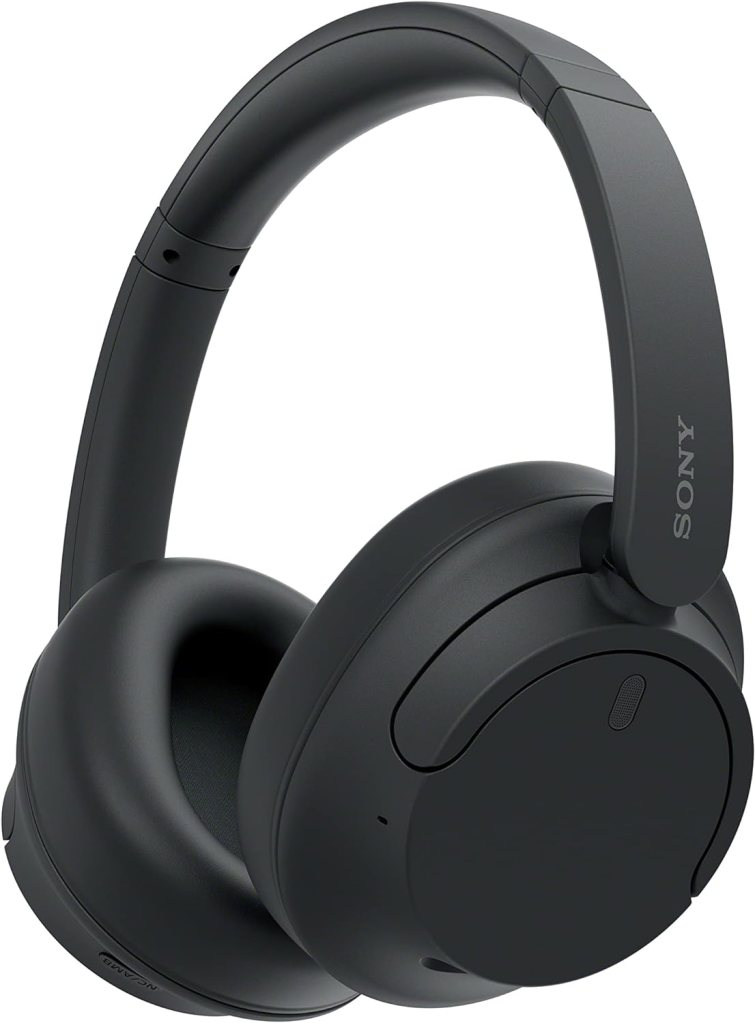
Are you wondering how I cope with all the noise? It’s all thanks to my life-saving noise-cancelling headphones! (THIS IS NOT SPONSORED): https://www.amazon.co.uk/Sony-WH-CH720N-Cancelling-Bluetooth-Headphones-Black/dp/B0BTDX26B2/ref=asc_df_B0BTDX26B2/?tag=googshopuk-21&linkCode=df0&hvadid=697276731800&hvpos=&hvnetw=g&hvrand=2587563431722955801&hvpone=&hvptwo=&hvqmt=&hvdev=c&hvdvcmdl=&hvlocint=&hvlocphy=1007877&hvtargid=pla-1964263222020&psc=1&mcid=1f32531ec5483869b5152f72a3b700ed&th=1&psc=1&gad_source=1
“What makes us different, also makes us special. ” – Anonymous
What are some of your sensory preferences? How do you manage Sensory Overloads?
Signing off,
Anna.
As a young woman of colour who was born with a chronic illness, it goes without saying that I navigate a world filled with countless struggles and complexities. Racism, health challenges, academic obstacles, and societal expectations all converge to shape my daily reality in ways that are often difficult to explain or fully understand. Each day brings its own set of snags. And yet, this is just the beginning of a much longer list, a list that includes the unseen battles and quiet frustrations that rarely find a voice in conversations about what it means to live in a world that isn’t always built for people like me.
For example, I was born with a condition called hydrocephalus which is also known as ‘water on the brain’. A device called a shunt is used to drain the water to a different area. I often like to think of myself as “part robot” because I have a device in my brain. However, being “part robot” has its limitations. From a young age I’ve been treated like a glass vase. I wasn’t allowed to climb trees with my friends and still, even as I’m almost eighteen years old, I’m not allowed to go on extreme rollercoasters. Despite this, I had a desire to do everything that I knew would be detrimental to my health; Boxing, skydiving, gymnastics, but I’m not even able to play hurling because the helmet presses on my shunt valve.
It should be noted that life with hydrocephalus became a little more difficult when I started secondary school. My mom thought it would be a good idea for me to do technology and tech graphics since many people with my condition lack motor skills. Spoiler alert: it was a terrible idea. I was very behind in the work, and it tore at my self-esteem. As well as that, certain teachers made me feel stupid even when I explained my condition.
Along with hydrocephalus, I recently found out that I have autism. It wasn’t much of a surprise considering my awkward demeanour and especially my lack of motor skills. Most of my life I’ve found socializing puzzling. Sometimes I don’t understand social cues and even sarcasm. Without a doubt it makes me feel a bit silly when someone is joking and I’m not able to tell. As a result of this I sometimes feel like an alien. I recall being asked why I don’t feel anything or why I don’t show any emotion, however I’ve now realised that as an autistic person I feel everything at such an extreme level. We feel things so much differently than neurotypicals which is why we react so strongly or passionately to certain things. I feel like society is only catering to autistic people who have high-support needs rather than shining a light on those who have low-support needs as well. For instance, at school I feel underrepresented as someone who already has an invisible disability other than autism. Why can’t I wear my headphones in class when it gets too noisy? Why shouldn’t I be allowed to leave class for a few minutes when I feel overstimulated? Anyways, I digress.
Not only is socialising confusing for me, but also change is something that has always bemused me. As a younger child, I’ve never liked the idea of trying anything new such as foods, hairstyles and clothing. Now that I’m a little older, things have changed a little, but I’m still very set in my ways. The more I learn about myself, the more I understand that I hate change because I despise uncertainty and things I’m not familiar with.
There are fewer complex things in life that I find perplexing. For instance, I’m not sure I can quite grasp the concept of love. I look around and see my peers canoodling with one another and I’m astonished. I’d like to think I’ve been in love before, however as an autistic individual I find it difficult to differentiate love from a fixation.
Besides romantic relations, I’ve often found friendships troubling as well. For example, when secondary school started and everyone formed their cliques, I felt that I didn’t fit into any group. However, I quickly adapted to my situation and became a social chameleon, in the sense that I would try my best to blend into any group I found myself in. For example, I used to join a group of people who represented everything I stood against but I’d pretend to share their interests so I wouldn’t be alone. In addition to that, I have a hard time navigating one’s true intentions in a friendship. Often, I’m so eager for friendship that I turn a blind eye to any sign of malicious behaviour.
Although I used to yearn for the company of others, as I continue to grow, I wonder why being alone is so frowned upon. Fifth Year was a time where I explored different groups of people, and during that time I realised that being alone isn’t that bad. The problem isn’t being alone, the problem is being perceived as a loner. Anyhow, who cares what everyone else thinks…right?
Another thing in life that doesn’t make sense is racism. It is mindboggling how hatred can stem from the colour of one’s skin. It confuses me why anyone would want to continue a cycle of hate and division instead of teaching our children and grandchildren how to love and unite. In my opinion, the worst part is when people of colour start turning against each other. Instead of fighting the hate you’re feeding into it. Why are we debating which African country has the best food? Why are we fussing about whether light-skinned black people are better looking than the dark-skinned black people. I believe that if we keep creating rifts between each other then we’re no better than the racists we protest.
Reflecting on all these complexities, I’ve come to realize that life itself is a puzzle, and perhaps it is meant to be that way. It is filled with contradictions, unknowns, and moments that seem impossible to decipher. But maybe that’s the point. Life is not meant to be understood all at once; it’s meant to be experienced, layer by layer, day by day. I’ve spent so much time trying to fit into a world that feels like it wasn’t designed for me, trying to decode its rules and make sense of its chaos. But what I’m starting to learn is that perhaps I don’t need to have all the answers.
There is a certain freedom in embracing the unknowns, in accepting that I will never completely understand why some things are the way they are. I may never fully comprehend why people choose to hate over love, or why differences are met with fear rather than celebration. I may never get why society has such a rigid mould for what a “normal” life should look like or why those who don’t fit into that mould are often made to feel less than. And while I don’t have all the answers, I am learning to live with the questions.
I am realizing that there is strength in my differences, in my unique perspective on life. My experiences as a young woman of colour with a chronic illness and autism give me insights that many others may never have. I see the world through a lens that captures both its beauty and its flaws, and I have the power to use my voice to challenge, to question, and to demand better. I am learning to see my challenges not as barriers, but as stepping stones to growth and self-discovery.
Indeed, life is puzzling. However, it is also filled with endless possibilities. For every door that has closed because of my health, my race, or my neurodivergence, there are other doors waiting to be opened doors that lead to spaces where I can be myself without apology. As I continue to navigate this world, I am beginning to understand that my journey is not about fitting into pre-existing moulds, but about creating a space where I belong just as I am.
I don’t have to have everything figured out, and that’s okay. I am learning to be patient with myself, to find peace in the questions, and to trust that, with time, I will find the answers that matter most to me. Until then, I will keep moving forward, one step at a time, embracing the parts of life that are still a mystery, and finding comfort in the knowledge that there is beauty in being different, strength in being vulnerable, and courage in simply being me. Life may always be puzzling, but it is in that very puzzle that I am finding my own way, my own voice, and my own path.

 AfroSkeptic